[ . BACK to WORLDKIGO . TOP . ]
:::::::::::::::::::::::::::::::::::::::::::::::::::::::::::::::::::::::::::::::::::::::::::::::::::::
Welcome to my Travelogue throught Asia,
... ... ... via Haiku !
CHINA
China : Dunhuang Travelogue Tonko 敦煌
China : Guilin Travelogue Keilin 桂林
........... Autumn Memories Keilin, Guilin 桂林
China : Peking Travelogue
China : Shanghai Travelogue
China : Anji Bridge
.........................Photo Albums
Dunhuang (Tonko), Mogao Grottoes 敦煌 Part 1 and 2
Keilin (Guilin) 桂林
Peking北京
Shanghai 上海
.................................................................................
. Tiger Balm Gardens .
::::::::::::::::::::::::::::::::::::::::::::::::::::::::::::::::::::::::::::::
INDIA 1979
Faces of the Himalayas -
Dharamsala Tibetan Opera 1979
Kashmir Travelogue
Kashmir PHOTO ALBUM
Himalayas PHOTO ALBUM Keylong, Manali
The burning ghats. Benares
Benares / Varanasi PHOTO ALBUM
NEPAL
PHOTO ALBUM
::::::::::::::::::::::::::::::::::::::::::::::::::::::::::::::::::::::::::::::

JAPAN
INDEX of my Japan Travelogues
... ... ... ... Start exploring from HERE !
. Daruma Pilgrims
Introducing famous Places and People of Japan
. Introducing
Japanese Festivals and Ceremonies
::::::::::::::::::::::::::::::::::::::::::::::::::::::::::::::::::::::::::::::
TAIWAN
Taiwan Travelogue
Taiwan - PHOTO ALBUM
::::::::::::::::::::::::::::::::::::::::::::::::::::::::::::::::::::::::::::::
THAILAND
Thailand Travelogue
Thailand - PHOTO ALBUM
:::::::::::::::::::::::::::::::::::::::::::::::::::::::::::::::::::::::::::::::::::::::::::::::::::::
:::::::::::::::::::::::::::::::::::::::::::::::::::::::::::::::::::::::::::::::::::::::::::::::::::::
External Travel LINKS
Travel Between The Pages
is a virtual community where travelers, writers, readers and creative artists can share ideas, advice, opinions and enthusiasm.
We hope to bring you inspiring, informative posts on travel, books, writers, art and events.
Brian D. Butler
http://travelbetweenthepages.com/about/
:::::::::::::::::::::::::::::::::::::::::::::::::::::::::::::::::::::::::::::::::::::::::::::::::::::

:::::::::::::::::::::::::::::::::::::::::::::::::::::::::::::::::::::::::::::::::::::::::::::::::::::
SEARCH all my articles

:::::::::::::::::::::::::::::::::::::::::::::::::::::::::::::::::::::::::::::::::::::::::::::::::::::::::::::::::::::::::::
[ . BACK to DARUMA MUSEUM TOP . ]
[ . BACK to WORLDKIGO . TOP . ]
:::::::::::::::::::::::::::::::::::::::::::::::::::::::::::::::::::::::::::::::::::::::::::::::::::::::::::::::::::::::::::
:::::::::::::::::::::::::::::::::::::::::::::::::::::::::::::::::::::::::::::::::::::::::::::::::::::
3/05/2024
Welcome and Enter !

12/24/2019
nenga 2020
[ . BACK to Worldkigo . TOP . ]
::::::::::::::::::::::::::::::::::::::::::::::::::::::::::::::::::::::::::::::::::::::::::::::::::::

::::::::::::::::::::::::::::::::::::::::::::::::::::::::::::::::::::::::::::::::::::::::::::::::::::
Read my Haiku Archives
My Daruma Museum Japan
[ . BACK to WORLDKIGO . TOP . ]
:::::::::::::::::::::::::::::::::::::::::::::::::::::::::::::::::::::::::::::::::::::::::::::::::::::
12/21/2015

12/29/2014
Japan Index
[ . BACK to TOP . ]
::::::::::::::::::::::::::::::::::::::::::::::::::::::::::::::::::::::::::::::::::::::::::::::::::::
INDEX for my trips in Japan

Daruma Pilgrims and other trips
Introducing temples and places of Japan
... ... ...
Travelogue Japan
Travelogue Japan 1977/78, in Black and White.
... ... ...
Abason Village, Okayama 阿波村 shrine Chiiwa Jinja 千磐神社
Chinese Dragon Park, Tottori Encho En Park 燕趙園
Chizu 智頭, Bizen Kaido (Tottori)
Daisen, Mount Daisen in Tottori 大山
Doi Shrine, Mimasaka 土井神社
Ehime, Summer 2006 ..... Photo Album
Fukuyama Spring 2007 ..... Photo Album
Izumo Kaido, The Old Road of Izumo 出雲街道
Katsuyama Town with its Temples and Shrines 勝山宿場
Koshihata Village, Temple Entsuu-Ji, Okayama ..... Photo Album
Kyoto, Hana no Miyako 花の都
Mitoku San, Temple Sanbutsu-Ji
Mitoku san, Nage-ire Doo, Kurayoshi ..... Photo Album 投げ入れ堂
Nagisan 那岐山, Mount Nagi and the plum blossom park in Kume
Nagi Hill Station / 那岐山麓山の駅 Yama no Eki
Nagi and Chizu ... ALBUM
Nara 奈良, the ancient capital
.................................................................................
Ohaga 大垪和西の棚田 - 道の駅 - 山里の駅
Ohaga Nishi, Tanada in May, 2010
Tanada Matsuri, Summer 2010
Takitani Pond 滝谷の池, Autumn 2010
.................................................................................
Ogura Hyakunin Isshu Poems and Place names 小倉百人一首
Okutsu in Okayama Prefecture
Okutsu and Lake, November 2005 ..... Photo Album
Osorezan 恐山 Mount Osoresan
Hotoke-ga-ura 仏が浦
Aomori
Shimanami Road 2005
Shimanami Kaido and Imabari, Shikoku ..... Photo Album
Takahashi Town, July 2005..... Photo Album
Takahashi, Yakushi-In and Fukiya Bengara Village Spring 2008
Tokushima, Awaji Island ..... Photo Album
..... Awaji and Takadaya Kahei 高田屋嘉兵衛
Tottori ... Sand Dunes, Castle Park, Jinpukaku
Tottori ..... Photo Album
Yonago and Mt. Daisen, April 2005 ..... Photo Album
Yonago Flower Park, April 2006 ..... Photo Album
Yoshitsune Temple Gikeiji at Minmaya
「義経寺」(ぎけいじ) 三厩村 - Dragon Horse Temple 龍馬山

Fukuyama Castle
:::::::::::::::::::::::::::::::::::::::::::::::::::::::::::::::::::::::::::::::::::::::::::::::::::::
. DARUMA PILGRIMS
Places and People of Japan
:::::::::::::::::::::::::::::::::::::::::::::::::::::::::::::::::::::::::::::::::::::::::::::::::::::

12/28/2014
- Kaido Roads in Japan -
[ . BACK to Worldkigo . TOP . ]
. Kaido 街道 Highways - ABC Index .
. Legends about the Kaido highways .
::::::::::::::::::::::::::::::::::::::::::::::::::::::::::::::::::::::::::::::::::::::::::::::::::::
Kaido: The Ancient Highways and Roads of Japan
日本の街道
Japan developed a nationwide network of roads and highways already in the 7th century to carry things on foot, horseback, and wheeled traffic and to transport goods between towns and villages. The major roads, called kaido, started from the capital in Kyoto (then known as 平安京 Heiankyo).
There were seven major roads. The most important ones ones were the westbound route from Kyoto, the Sanyodo, and the eastbound route to Edo, the Tokaido. These historical names have been preserved in the names of major railway lines and modern highways.
In due time lodgings for travelers along these highways grew into towns which served their local specialities and sold souveniers.
Some routes with easier access, avoiding steep passes through the mountains, came into being, as travelling and pilgrimages became more popular. But the construction of bridges and operation of ferries across some rivers were prohibited for reasons of military defense, and travelers were carried over on the shoulders of porters or in palanquins.
During heavy rainfall, crossing these rivers was too dangerous and travellers had to stay in lodgings, enjoying the "rice serving girls", or all kinds of gambling.

Kaido Walking ”街道ウオーキング”
Some roads were famous for transporting food or salt to Kyoto and other cities.
The old kaido roads enjoy a revival these days, with people walking them again, taking photos and exchanging information in many BLOGS.
Travelling with Matsuo Basho
. Oku no Hosomichi 2007
. Kaido Ancient Roads - Yokai and Yurei
街道の妖怪 - 幽霊 .
. Legends about the Kaido highways .
. shukuba 宿場 post station, postal station .
Edo shishuku 江戸四宿 The four most important SHUKUBA out of Edo
- - - . hatago (旅籠, 旅篭) lodgings .
It will take some time
to introduce these roads in more detail. They will be listed here
. Kaido 街道 Highways - ABC Index .
::::::::::::::::::::::::::::::::::::::::::::::::::::::::::::::::::::::::::::::::::::::::::::::::::::

ookan 往還 Okan, main road
kaidoo かいどう【海道】sea road
::::::::::::::::::::::::::::::::::::::::::::::::::::::::::::::::::::::::::::::::::::::::::::::::::::
. Gokishichidō 五畿七道 Gokishichido -
Five provinces and seven roads .
kinai shichidoo 畿内七道 .
:::::::::::::::::::::::::::::::::::::::::::::::::::::::::::::::::::::::::::::::::::::::::::::::::::::
Akagane Kaido あかがね街道 / 銅山街道, 銅街道 足尾銅山 Ashio Dozan
Akiba Kaido 秋葉街道
Asuke Kaido 足助街道 -Aichi
Buzen Kaido 豊前街道
Chikoku Kaido 千国街道 - Nagano
Fuji Oyama michi ふじ大山道
Fukiya Orai 吹屋 / ふきや道 Fukiya michi
Genpei Roman Kaido 源平ロマン 街道
Hagi Okan 萩往還
Harima Oji 播磨
Hita Kaido 日田街道 - Oita
Hoki Orai 伯耆
Hokkoku Kaido 北国街道
Kamiyama Kaido 神山街道 - Tokushima
Kanagawa Okan 神奈川往還
Kichiji Kaido 吉次街道
Kiiji 紀伊路
Kitsurei Kaido 吉例街道 -Fukui Gifu
Kunigamihosei Kaido 国頭方西海道 - Okinawa, sea road
Kurihan Kaido 九里半街道
Matsumoto Kaido 松本街道
Matsunoyama Kaido 松之山街道 - Echigo
Miike Okan 三池往還 - Echizen
Musashi Michi 武蔵道
Nishihama Kaido 西浜街道 -Aomori Akita
Ryujin Kaido 龍神街道 - Wakayama
Shichikajuku Kaido 七ヶ宿街道 - Fukushima Miyagi Yamagata
Shimizu Kaido 清水街道
shugaa roodoo シュガーロード "Shugar Road" "highway of sugar" Nagasaki
Shuzan Kaido 周山街道 - Kyoto
Suyama Kaido 須山街道 - Kyoto Fukui
Takachiho Kaido 高千穂街道 - 高千穂神話街道 Fukuoka, Oita, Miyazaki, Kagoshima
Takeuchi Kaido 竹内街道
Tanabue Kaido 田名部街道 - Aomori
Tobeto Kaido 砥部陶街道 - Ehime
Togakushi Kodo 戸隠古道
Totsukawa Kaido 十津川街道 - Nara Wakayama
Ushu Kaido 羽州街道
a subroute of the Ōshū Kaidō and the Sendaidō
Yagifuda no tsuji 八木札の辻
Zenkoji Do 善光寺道
.................................................................................
- - - - - Old Highways
Ani Kaido 阿仁街道 - Akita
Hakone Hachiri 箱根八里 - Odawara, Mishima
Iraka no michi いらか道 / 甍 - Nara
Ogi Akadomari Dochu 小木・赤泊道中 - Sado
Wakamatsu Kaido 若松街道 - Aizu
.................................................................................
- - - - - wikipedia
Iida Kaido 飯田街道 - in various regions
Konpira Kaido 金毘羅街道
kosumosu kaido コスモス街道 - Cosmos flowers
meruhen kaido メルヘン街道 - Maerchen
romanchikku kaido ロマンチック街道 Romantische Stasse - Nagano
sarada kaido サラダ街道 "Salad road" in Nagano
::::::::::::::::::::::::::::::::::::::::::::::::::::::::::::::::::::::::::::::::::::::::::::::::::::
. Hime Kaido 姫街道 princess routes .
Hime kaidō, Hime Kaidoo
the name given to minor routes that created detours around the difficult crossings (or river crossings) of main routes during the Edo period in Japan. These routes could be found on many of the Edo Five Routes, as well as on other sub-routes that crossed the country.
.................................................................................
. Michinoku, Mutsu 陸奥 region in Tohoku .
みちのく路 Michinoku Roads
. Nikkoo Kaidoo 日光街道 Nikko Kaido .
日光例幣使街道 Nikko Reiheishi Kaido
御成道 Onarimichi Onari Michi for the Shogun only
. 会津街道 Aizu Kaido .
Aizu Nishi Kaido 会津西街道
Echigo Kaido 越後街道 - 越後道
. Oshu Kaido 奥州街道 Ōshū Kaidō .
陸前浜街道 Rikuzen Hamakaido
石巻街道 Ishinomaki Kaido
遠野・釜石街道 Tono Kaido Kamaishi Kaido
宮古街道 Miyako Kaido
小本街道 Omoto Kaido
野田・沼宮内街道 Noda Kaido - Numakunai Kaido
七ケ宿街道 Shichigashuku Kaido
羽州街道 Ushu Kaido
笹谷街道 Sasaya Kaido
六十里越街道 Rokujuurigoe Kaido / Rokujuri Kaido - Yamagata
秋田街道 Akita Kaido
津軽街道 Tsugaru Kaido
Sendaidoo 仙台道 Sendaidō, Sendaido
Ooyama kaidoo 大山街道 Ōyama Kaidō, Oyama Kaido
(also called Atsugi Kaido or 矢倉沢往還 Yagurazawa okan)
Toosandoo 東山道 Tosando, Tōsandō
"Eastern Mountain Roads" "Higashiyama no michi"
to eight provinces in the North in Tohoku.
It leads through the Northern Alpes.
© More in the WIKIPEDIA !
.................................................................................
..常総 -武甲 Joosoo . Fukoo
水戸街道 Mito Kaido - Mito Kaidō
成田道 Naritado / Narita Kaido 成田街道
. 川越街道 Kawagoe Kaido .
- - - Kawagoe Kodama Kaidō
. 青梅街道 Ome Kaido / Aome Kaido .
. 五日市街道 Itsukaichi Kaido
- - Ina Kaidoo 伊奈街道 Ina Highway .
. Kōshū Kaidō 甲州街道 Koshu Kaido Road .
- - Kooshuu Doochuu 甲州道中
.................................................................................
..東海・中部 Tokai and Chubu - Kantoo 関東
. Tokaido 53 Stations 東海道五十三次 Tookaidoo
. Hime Kaido 姫街道 princess route .
... Waki Kaido 脇街道 side route
. 鎌倉街道 Kamakura Kaido Highway .
伊勢路 Ise ji / 伊勢街道 Ise kaido
美濃路 Mino ji
身延道 Minobu michi
下田街道 Shimoda Kaido
. Nakasendoo 中山道 Nakasendo Highway .
Azuma Kaido 東街道
- - - small side roads along the Nakasendo, mostly used by horse transport or on foot to carry salt to inland
sanshuu kaidoo 三州街道 Sanshu Kaido. Kaido of three provinces
. Ina Kaidoo 伊奈街道 Ina Highway (Ina Kaido 伊那街道) .
- and chuuma no michi 中馬のみち Chuma "road for transport horses"
. 秩父往還 Chichibu Okan - Chichibu Kaido .
佐久甲州街道 Saku Koshu Kaido - Kooshuu Kaidoo
浜街道 Hama Kaido (kinu no michi 絹の道 silk road)
- from Hachioji to Yokohama 八王子市八日町
Toogane Onari Kaidoo東金御成街道 Tōgane Onari Kaidō
In Chiba prefecture, former Boosoo 房総往還 Boso Okan
leading to Togane Goten 東金御殿, a hunting ground of the Tokugawa Shoguns.
古峰ヶ原街道(コブガハラカイドウ Kobugahara Kaido / Tochigi, Kanuma
.................................................................................
. Edo Gokaido, Gokaidō 江戸五街道 Edo Five Kaido .
Five Kaido starting at Nihonbashi, Edo
Koshu Kaido 甲州街道 Kōshū Kaidō
Nakasendo 中山道 . 中仙道 Nakasendō
Nikko Kaido 日光街道 Nikkō Kaidō
Oshu Kaido 奥州街道 Ōshū Kaidō
Tokaido 東海道 Tōkaidō
. 甲州裏街道 Koshu Ura Kaido .
starting from Oome, Ōme 青梅 / おうめ Ome town
. Three famous barrieres (sankan 三関) checkpoints
leading out of - into Kyoto:
Ise no Suzuka 伊勢の鈴鹿(すずか)
Mino no Fuwa 美濃の不破(ふわ)
Echizen no Arachi 越前の愛発(あらち)
..... and then one more
Out of Kyoto and into the "Eastern Countries"
located on the Tokaido road, Otsu:
Oosaka no seki 逢坂の関 Osaka no seki - The Osaka Barrier.
.................................................................................
Matsumaedō, Matsumaedoo 松前道 / Matsumae Kaido 松前街道 - Hokkaido
.. 北国路 Kitakuni / Hokkokuji Northern Japan
会津通り Aizu doori
三国街道 Mikuni Kaido
北国街道 Kitakuni Kaido
北陸道 Hokurikudo Hokurikudō
飛騨街道 Hida Kaido
. Hida no Takumi Kaido 飛騨の匠街道 .
野麦街道 Nomugi Kaido
郡上街道 Gujo Kaido . Gujoo Kaidoo
白川街道 Shirakawa Kaido
塩硝街道 Ensho Kaido
美濃街道 Mino Kaido
上保街道 Kamiho Kaido
. 千国街道 Chikuni Kaido
"salt road" 塩の道 shio no michi
.................................................................................
. Abe Kaido 安倍街道 - Shizuoka .
..近畿路 Kinki
. Kyoo Kaidoo 京街道 Kyōkaidō - Kyo Kaido (Kyoto Kaido) .
(linking Kyoto and Osaka),
- and - roads leading to Kyoto, including
Osaka Kaido 大阪街道 Ōsaka Kaidō
Fushimi Kaido 伏見街道 Fushimi Kaidoo
Toba Kaido 鳥羽街道 Toba Kaidoo
. Tango Chirimen Kaidoo 丹後 縮緬街道 Silk crepe road .
西近江路 Nishi Omi ji
若狭路 Wakasaji
周山街道 Shusan Kaido - Shuuzan Kaidoo
丹波路 Tanbaji
奈良街道 Nara Kaido
. 柳生街道 Yagyu Kaido - Nara .
伊賀街道 Iga Kaido
山の辺の道 Yamanobe no michi
竹内街道 Takenouchi Kaido
初瀬街道 Hase Kaido
大和街道 Yamato Kaido, Yamato no Kodō
紀州街道 Kishu Kaido
. Kumano Kaido 熊野街道 Roads to Kumano .
熊野街道・大辺路 Kumano Kaido Ohechi
熊野街道・中辺路 Kumano Kaido Nakahechi
高野街道 Koya Kaido (Kooya) - Kōya Kaidō
. Saya Kaidoo 佐屋街道 The Saya Road .
from Atsuta Shrine, Nagoya, to Kuwana
Shita Kaidoo 下街道 "Lower Kaido Road" in Gifu, an OFF road from the Nakasendo.
- - - - - part of the Road to Temple Zenkooji 善光寺街道 -
from Nagoya via Kasugai 春日井, Tajimi 多治見, Mizunami 瑞浪 to Ena 恵那市.
(about 57 km)
善光寺道、釜戸筋、内津道、名古屋道、伊勢道 are other names.
(There are other roads called "shita kaido" in Japan.)
Shimo kaidoo しもかいどう / 下街道 in Nara
From 大和国 - 高田 to 五條.
. Saba Kaido 鯖街道 Mackerel Road
.................................................................................
.. Chuugoku 中国路 Chugoku
西国街道 Saikoku Kaido - Saigoku Kaidō
(唐街道・山崎通り) Kara Kaido - Yamazaki doori
山陽道 Sanyodo San'yōdō
山陰道 Sanindo San'indō
篠山街道 Sasayama Kaido
. Arima kaidoo 有馬街道 Arima Kaido Highway .
- Yunoyama Kaido 湯の山街道
. 智頭街道 Chizu Kaido
伯耆往来 Hooki Orai
東城往来 Tojo Orai
北浦街道 Kitaura Kaido
石見街道 Iwami Kaido / . Iwami Ginzan Kaido 石見銀山街道 .
..... 石州街道 Sekishu Kaido Highway
出雲往来石見・安芸 Izumo Orai Iwami Aki
出雲往来美作・播磨 Izumo Orai Mimasaka - Harima
. Izumo Kaido 出雲街道
The Old Trade Road of Izumo
因幡街道 Inaba Kaido
from Himeji to Tottori, with 11 shuku 宿
若桜街道 Wakasa Kaido
from Tottori to Wakasa
- - - 若桜宿 Wakasa juku, 鳥取県八頭郡若桜町
. Hirata momen kaido 平田の木綿街道 Hirata Cotton Road .
Shimane
. Kagura Kaido かぐら街道
. Sakushu Kaido 作州街道
. unagi kaidoo うなぎ街道 Unagi Kaido Eel Highway .
From Izumo to Katsuyama
.................................................................................
. . 四国路 Shikoku . .
Nankaidoo Nankaidō 南海道 Nankaido "Southern Sea Road"
© More in the WIKIPEDIA !
. The old Highways in Shikoku 四国の古街道 .
阿波街道 Kaido
撫養街道 Muya Kaido
川北街道 Kawakita Kaido
伊予街道 Iyo Kaido
- - - - - Tosa Kaidō
土佐(北)街道 Tosa Kaido North
土佐(東)海道 Tosa Kaido East
丸亀街道 Marugame Kaido
野根山越え None Yamagoe
高松街道 Takamatsu Kaido
高松(丸亀)街道 Takamatsu Marugame Kaido
多度津街道 Tadotsu Kaido
長尾街道 Nagao Kaido
讃岐街道 Sanuki Kaido
小松街道 Komatsu Kaido
今治街道 Imabari Kaido
大洲街道 Ozu Kaido - Oozu Kaidoo
宇和島街道 Uwajima Kaido
宿毛街道 Sukumo Kaido
松山街道 Matsuyama Kaido
中村街道 Nakamura Kaido
梼原街道 Yusuhara Kaido
淡路街道 Awaji Kaido, one of the five Awa Kaido 阿波五街道
. Shimanami Kaido しまなみ街道
from Honshu to Shikoku
. 志度街道 Shido Kaido .
Higashi Sanuki Hama Kaido 東讃浜街道
Hama Kaido 浜街道 Road along the Beach or 東下道
Dappan Michi, dappan no michi, Dappandoo 脱藩道
Taken by Sakamoto Ryoma in 1862
.................................................................................
..九州路 Kyushu
Saikaidō, Saikaidoo 西海道 Saikaido "Western Sea Circuit"
© More in the WIKIPEDIA !
長崎街道 Nagasaki Kaido - Nagasaki Kaidō
唐津街道 Karatsu Kaido
薩摩街道 Satsuma Kaido
日向街道 Hyuga Kaido (Hyuuga)
. 島原街道 Shimabara Kaido .
..... and
Uki Kaido 有喜街
日田往還 Hida Okan (Funai)
豊後街道 Bungo Kaido
人吉街道 Hitoyoshi Kaido
:::::::::::::::::::::::::::::::::::::::::::::::::::::::::::::::::::::::::::::::::::::::::::::::::::::
Reference : 日本の街道
絹の道 - Kinu no michi - Silk Road
source : yumi no tabi
::::::::::::::::::::::::::::::::::::::::::::::::::::::::::::::::::::::::::::::::::::::::::::::::::::
. Choosenjin Kaidoo 朝鮮人街道
Road of the Korean Ambassadors
The road led from Korea via Kyushu along the inland sea to Kyoto.
:::::::::::::::::::::::::::::::::::::::::::::::::::::::::::::::::::::::::::::::::::::::::::::::::::::

藤棚を潜れば 王子街道哉
fujidana o kugureba ooji kaido kana
passing through
wisteria trellises
to the Oji Road
Kobayashi Issa
. Wisteria and Haiku
From Akabane, Edo to the temple Zensho-Ji (Zenshooji 善性寺) in Negishi, Arakawa ward.
::::::::::::::::::::::::::::::::::::::::::::::::::::::::::::::::::::::::::::::::::::::::::::::::::::

Hakata Men Kaido 博多めん街道 Hakata Noodle Street
だるま(博多めん街道) Shop called DARUMA
::::::::::::::::::::::::::::::::::::::::::::::::::::::::::::::::::::::::::::::::::::::::::::::::::::
External LINKS
街道文庫 街道歩き相談承り処
品川区北品川2、TEL 03-5462-0267
by 田中義巳 Tanaka Yoshimi
- Reference -
::::::::::::::::::::::::::::::::::::::::::::::::::::::::::::::::::::::::::::::::::::::::::::::::::::
shinkoo no michi 信仰の道 roads of faith
There are many famous pilgrimages in Japan.
. Junrei 巡礼 pilgrimages in Japan .
. Henro pilgrims in Shikoku 四国お遍路さん .
:::::::::::::::::::::::::::::::::::::::::::::::::::::::::::::::::::::::::::::::::::::::::::::::::::
. Kaido 街道 Highways - ABC Index .
INDEX for my trips in Japan
My Daruma Museum Japan
[ . BACK to WORLDKIGO . TOP . ]
- #kaidoo #kaido #highway #road #tokaido -
:::::::::::::::::::::::::::::::::::::::::::::::::::::::::::::::::::::::::::::::::::::::::::::::::::::
12/25/2014
Tokaido 53 stations
[ . BACK to DARUMA MUSEUM TOP . ]
:::::::::::::::::::::::::::::::::::::::::::::::::::::::::::::::::::::::::::::::::::::::::::::::::::::
The 53 stations of the Tokaido Road
The 53 Stations of the Tookaidoo
(東海道五十三次, Tōkaidō Gojūsan-tsugi) are the rest areas along the Tōkaidō, which was a coastal route that ran from Nihonbashi in Edo (modern-day Tokyo) to Sanjō Ōhashi in Kyoto.
© More in the WIKIPEDIA !

Nihonbashi
. . . CLICK here for Photos of the woodblocks !
. hatago (旅籠, 旅篭) lodgings along the Tokaido
. chaya, -jaya 茶屋 tea shop, tea stalls along the road .
:::::::::::::::::::::::::::::::::::::::::::::::::::::::::::::::::::::::::::::::::::::::::::::::::::::
. Welcome to Edo 江戸 ! .
. Nihonbashi bridge (Nihonbashi 日本橋)
. 1. Shinagawa-juku 品川宿(Shinagawa)
Kanagawa Prefecture
. 2. Kawasaki-juku 川崎宿 (Kawasaki) .
..... . Rokugō, Rokugo no watashi 六郷の渡し Rokugo river crossing .
3. Kanagawa-juku 神奈川宿 (Yokohama)
4. Hodogaya-juku 程ヶ谷(保土ヶ谷)宿 (Yokohama)
5. Totsuka-juku 戸塚宿 (Yokohama)
. 6. Fujisawa-shuku 藤沢宿 (Fujisawa, Fujizawa) .
. 7. Hiratsuka-juku 戸塚宿 (Hiratsuka)
8. Oiso-juku 大磯宿 (Ooiso)
9. Odawara-juku 小田原宿 (Odawara)
. 10. Hakone-juku 箱根宿 (Hakone) .
Shizuoka Prefecture
. 11. Mishima-shuku 三島宿 (Mishima) .
. 12. Numazu-juku 沼津宿 (Numazu) .
13. Hara-juku 原宿 (Numazu)
. 14. Yoshiwara-juku 吉原宿 (Fuji) .
Tago no Ura 田子の浦

Ando Hiroshige 安藤広重
15. Kanbara-juku 蒲原宿 (Shimizu-ku, Shizuoka)
16. Yui-shuku 由比宿 (Yui, Ihara District)
17. Okitsu-juku 興津宿 (Shimizu-ku, Shizuoka)
18. Ejiri-juku 江尻宿 (Shimizu-ku, Shizuoka)
. 19. Fuchū-shuku 府中宿 Fuchu (Aoi-ku, Shizuoka) .
Abekawa mochi 安倍川餅 / 安倍川もち rice cakes from Abekawa river
. 20. Mariko-juku 鞠子宿 (Suruga-ku, Shizuoka)
tororojiru とろろ汁 yam soup porridge
21. Okabe-juku 岡部宿 (Okabe)
22. Fujieda-juku 藤枝宿 (Fujieda)
. 23. Shimada-juku 島田宿 (Shimada) .
and Tsukamoto Jooshu 塚本如舟 Joshu
. 24. Kanaya-juku 金谷宿 (Shimada) .
and Ooigawa 大井川 Oigawa
. 25. Nissaka-shuku 日坂宿 (Kakegawa) .
famous for the "Night weeping stone" 夜泣き石 at the pass
佐夜の中山 Sayo no Nakayama
26. Kakegawa-juku 掛川宿 (Kakegawa)
27. Fukuroi-juku 袋井宿 (Fukuroi)
- - - . yuzu no ki Jizoo 柚の木地蔵 Jizo of the Yuzu citron .
. 28. Mitsuke-juku 見付宿 (Iwata). -connecting to Hime Kaido
. 29. Hamamatsu-juku 浜松宿 (Hamamatsu) - connecting to Hime Kaido
30. Maisaka-juku 舞阪宿 (Hamamatsu)
.... take a short boat ride to the other side of Laka Hamanako 浜名湖
. 31. Arai-juku 新井宿 (Arai, Hamana District)
32. Shirasuka-juku 白須賀宿 (Kosai)
Aichi Prefecture
33. Futagawa-juku 二川宿 (Toyohashi)
34. Yoshida-juku 吉田宿 (Toyohashi) - connecting to Hime Kaido
- - - . Traveler fixing his straw sandals at Yoshida .
. 35. Goyu-shuku 御油宿 (Toyokawa) - connecting to Hime Kaido
. 36. Akasaka-juku 赤坂宿 (Otowa, Hoi District)
. 37. Fujikawa-shuku 藤川宿 (Okazaki) .
. 38. Okazaki-shuku 岡崎宿 (Okazaki)
"salt road" 塩の道 shio no michi
39. Chiryu-juku 池鯉鮒宿 (Chiryuu)
. 40. Narumi-juku 鳴海宿 (Midori-ku, Nagoya)
. 41. Miya-juku 宮宿 (Atsuta-ku, Nagoya) and Atsuta Shrine
Mie Prefecture
. 42. Kuwana-juku 桑名宿 (Kuwana) .
. 43. Yokkaichi-juku 四日市宿 (Yokkaichi) .
. 44. Ishiyakushi-juku 石薬師宿 (Suzuka) .
45. Shono-juku 庄野宿 (Shoono, Suzuka)
46. Kameyama-juku 亀山宿 (Kameyama)
. 47. Seki-juku 関宿 (Kameyama) .

Kiyotaki Kannon 清滝観音 by Katsushika Hokusai

By Kawanabe Kyōsai 河鍋暁斎 - 鈴ヶ山坂ノ下
48. Sakashita-juku, Sakanoshita 坂下宿 (Kameyama)
Shiga Prefecture
49. Tsuchiyama-juku 土山宿 (Kōka)
. 50. Minaguchi-juku 水口宿 (Minakuchi) (Kōka) .
. 51. Ishibe-juku 石部宿 (Konan) .
. 52. Kusatsu-juku 草津宿 .
. 53. Otsu-juku 大津宿 (Ootsu)
Otsu Paintings (大津絵 Otsu-E)
- - - - - also a station at the
. Nakasendoo 中山道 The Nakasendo Road .

Ando Hiroshige 安藤広重
Sanjo Ohashi bridge 三条大橋 Kyoto endpoint
. Bridge over the Kamo River 京師 Keishi .
. Kyoto 花の都 Hana no Miyako
Sanjo Ohashi (Kyoto)
:::::::::::::::::::::::::::::::::::::::::::::::::::::::::::::::::::::::::::::::::::::::::::::::::::::
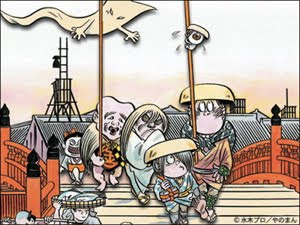
水木しげる妖怪道五十三次
The Fifty-three Stations of the Yokaido
by Shigeru Mizuki


warai Jizo 笑い地蔵 laughing Jizo at Kakegawa
. Gegege no Kitaro ゲゲゲの鬼太郎
:::::::::::::::::::::::::::::::::::::::::::::::::::::::::::::::::::::::::::::::::::::::::::::::::::::

Shoono 庄野 Shono Juku
Stamps of the Tokaido Stations by Ando Hiroshige
source : a-kumamoto ...
:::::::::::::::::::::::::::::::::::::::::::::::::::::::::::::::::::::::::::::::::::::::::::::::::::::

Tōkaidōchū Hizakurige 東海道中膝栗毛
Shank's Mare
a picaresque comic novel (kokkei-bon) written by Jippensha Ikku (十返舎一九, 1765–1831), about the misadventures of two travelers on the Tōkaidō, the main road between Kyoto and Edo during the Edo Period. The book was published in twelve parts between 1802 and 1822.
The two main characters, traveling from Edo to Kyoto on their pilgrimage to the Ise Shrine, are called Yajirobē (彌次郎兵衛) and Kitahachi (喜多八).

Yaji and Kita's travels
As they make their way, they leave behind a trail of crude jokes and plentiful puns.
© More in the WIKIPEDIA !
:::::::::::::::::::::::::::::::::::::::::::::::::::::::::::::::::::::::::::::::::::::::::::::::::::::
H A I K U

比もよし五十三次華見笠
koro mo yoshi go juusan tsugi hanami-gasa
what a timing !
along the road of the 53 postal towns
straw hats of cherry blossom viewers
Kobayashi Issa
:::::::::::::::::::::::::::::::::::::::::::::::::::::::::::::::::::::::::::::::::::::::::::::::::::::
External LINKS
The Tokaido—Scenes from Edo to Meiji Eras
Jilly Traganou
Post-stations (shukuba) offering lodging and other facilities were established along the roads at equal distances. Middle stages and tea houses between post-stations facilitated shorter journeys. Travellers were controlled at checkpoints (sekisho) usually positioned at natural barriers on the roads (such as Hakone and Arai). The road infrastructure included bridges, river crossings, markers at every ri (3927 m) and road maintenance, as well as paving and roadside trees. Travelling was confined to foot for commoners and to horses (which had to be changed at each post station) or palanquins for high-status travellers. There were ferry services at water crossings (Ise Bay, Lake Hamana), but travellers had to hire porters at large rivers like Oi and Abe.
The trip from Edo to Kyoto took about 12 days at an average speed of 25 miles a day.
source : www.jrtr.net
Haiku about horses by
. Matsuo Basho 松尾芭蕉 - Archives of the WKD .
:::::::::::::::::::::::::::::::::::::::::::::::::::::::::::::::::::::::::::::::::::::::::::::::::::::
Yaji and Kita Kokeshi 野次 / 弥次 -喜多 道中もの こけし
source : zenmaitarow


:::::::::::::::::::::::::::::::::::::::::::::::::::::::::::::::::::::::::::::::::::::::::::::::::::::
. Saya Kaidoo 佐屋街道 The Saya Road .
from Atsuta Shrine, Nagoya, to Kuwana
. Kaido 日本の街道 The Ancient Roads of Japan .
. 江戸 Edo - 妖怪 Yokai monsters, 幽霊 Yurei ghosts .
- Bushu 武州 : Tokyo 東京都、Chiba 千葉県、Saitama 埼玉県
Tales along the Tokaido 東海道 road -
[ . BACK to WORLDKIGO TOP . ]
[ . BACK to DARUMA MUSEUM TOP . ]
- #tokaido #tookaidoo #highway -
:::::::::::::::::::::::::::::::::::::::::::::::::::::::::::::::::::::::::::::::::::::::::::::::::::::
1/22/2013
Shimada-juku
[ . BACK to Worldkigo . TOP . ]
::::::::::::::::::::::::::::::::::::::::::::::::::::::::::::::::::::::::::::::::::::::::::::::::::::
Shimada-juku 島田宿
Station Nr. 23 of the
. Tookaidoo 東海道 53 stations of the Tokaido Road .
:::::::::::::::::::::::::::::::::::::::::::::::::::::::::::::::::::::::::::::::::::::::::::::::::::::
The twenty-third of the fifty-three stations of the Tōkaidō. It is located in what is now part of Shimada, Shizuoka Prefecture, Japan.
Shimada-juku was located on the left bank (Edo side) of the Ōi River, just across from its neighboring post town, Kanaya-juku. The Tokugawa shogunate expressly forbit the construction of any bridge or ferry service over the Ōi River, forcing travellers to wade across its shallows. However, whenever the river flooded due to strong or long rains, it made passing nearly impossible. During period of long rains, visitors were sometimes forced to stay at Shimada-juku for several days, increasing the amount of money they spent.
Hakone Hachiri 箱根八里
A common saying about Shimada-juku was
"You can travel the 8 Ri to Hakone, but to cross it,
you must cross the uncrossable Ōi River"
箱根八里は馬でも越すが 越すに越されぬ大井川
Hakone hachiri wa uma demo kosu ga
kosu ni kosarenu Ōigawa.

The classic ukiyoe print by Ando Hiroshige from 1831-1834 depicts travellers crossing the shallows and sand banks of the Ōi River. Some are on foot, some are carried by porters and others are riding in kago.
© More in the WIKIPEDIA !
1 ri 里 is about 4 km.
:::::::::::::::::::::::::::::::::::::::::::::::::::::::::::::::::::::::::::::::::::::::::::::::::::::

馬方は知らじ時雨の大井川
umakata wa shiraji shigure no Ooigawa
the horse driver
might not know about this winter drizzle
of river Oigawa
Tr. Gabi Greve
Written in the end of the 10th lunar month, 1691
元禄4年10月下旬, collection 泊船集.
Basho was on the way back from a trip to Kansai. He stayed at the home of Jooshu 如舟 Joshu in Shimada.
He had safely crossed the river and was in Shimada, looking at the other side to Kanaya-juku.
His horse leader was from Kanaya and had to go back with his horse.
. Station Nr. 24 - Kanaya-juku 金谷宿 .
Placenames used by
. Matsuo Basho 松尾芭蕉 - Archives of the WKD .
:::::::::::::::::::::::::::::::::::::::::::::::::::::::::::::::::::::::::::::::::::::::::::::::::::::::
Tsukamoto Jooshu 塚本如舟 Joshu
? - 1724
~1724年閏4月17日)
He was the "river governor" 川奉行 kawa bugyoo, river commissioner at Shimada, his name was
Tsukamoto Magoemon 塚本孫兵衛. He was 84 when he died.
He appears in Basho's story of "Shimada no Shigure" 島田の時雨.
written in 1691, Basho age 48.
元禄4年10月下旬:48歳
Basho had been working for the Waterworks Department of Edo town for a while.
. mizu-bugyo 水奉行 the water "mayor" of Edo .
Basho visited Jooshu again in Genroku 7 (1694) and ate his eggplants:
苣はまだ青葉ながらに茄子汁
. chisa wa mada aoba nagara ni nasubi-jiru .
Memorial Stones of Basho visiting Joshu in Shimada.
Hokku by Basho written in Shimada and memorial stones in various places

source : itoyo/basho
宿かりて名を名乗らするしぐれ哉
yado karite na no nanorasuru shigure kana
trying to get a lodging
i have to call out my name
because of the sleet falling . . .
Tr. Gabi Greve
This hokku has the cut marker KANA at the end of line 3.
.............................................................................
「駿河路や花橘も茶の匂い」
元禄7年5月、江戸から西下の途次、相模、駿河路を経て、島田の宿に着くと、塚本如舟に泊った。大井川の川留めにあい4日間も如舟居に滞留。
田植えと共に旅の朝起 - 芭蕉 Basho
taue to
やはらかにたけよ今年の手作麦 - 如舟 Joshu
yawaraka ni
- 芭蕉 Basho
馬かたはしらじしぐれの大井川
umakata wa
元禄4年10月下旬、塚本如舟を訪う。
ちさはまだ青ばながらになすび汁
chiisa wa mada
たはみては雪まつ竹のけしきかな
tawamite wa
Oi Nikki 笈日記
道のべの木槿は馬に喰われけり
michinobe no
馬に寝て残夢月遠し茶のけぶり
uma ni nete
source : www.shimada-ta.jp
:::::::::::::::::::::::::::::::::::::::::::::::::::::::::::::::::::::::::::::::::::::::::::::::::::::
. The 53 Stations of the Tokaido 東海道五十三次 .
. Kaido 日本の街道 The Ancient Roads of Japan .
[ . BACK to DARUMA MUSEUM TOP . ]
[ . BACK to WORLDKIGO . TOP . ]
:::::::::::::::::::::::::::::::::::::::::::::::::::::::::::::::::::::::::::::::::::::::::::::::::::::
Kanaya-juku
[ . BACK to Worldkigo . TOP . ]
- umakata 馬方 see below -
::::::::::::::::::::::::::::::::::::::::::::::::::::::::::::::::::::::::::::::::::::::::::::::::::::
Kanaya-juku 金谷宿
Station Nr. 24 of the
. Tookaidoo 東海道 53 stations of the Tokaido Road .
quote
the twenty-fourth of the fifty-three stations of the Tōkaidō. It is located in what is now part of Shimada, Shizuoka Prefecture, Japan. During the Edo period, it was the easternmost post station of Tōtōmi Province.
Kanaya-juku was built up on the right bank of the Ōi River across from Shimada-juku. There were over 1,000 buildings in the post town, including three honjin, one sub-honjin and 51 hatago. Travelers had an easy travel to Nissaka-shuku, which was about 6.5 km (4.0 mi) away. However, whenever the river's banks overflowed, travelers were not able to pass through Kanaya and on to Shimada-juku, as the Tokugawa shogunate had expressly forbidden the construction of any bridge on the Ōi River.

The classic ukiyoe print by Ando Hiroshige (Hoeido edition) from 1831–1834 depicts a daimyo procession on sankin kotai crossing the river. The daimyo is riding in a kago, held about the water by a makeshift platform carried by numerous porters. His retainers are attempting to wade across the river. In the background, a small village is shown in the foothills.
© More in the WIKIPEDIA !
:::::::::::::::::::::::::::::::::::::::::::::::::::::::::::::::::::::::::::::::::::::::::::::::::::::
The Ooigawa (大井川, Ōi-gawa) Oi River, Ohigawa
is a river in Shizuoka Prefecture, Japan.
The Ōi River flows from the Akaishi Mountains, the branch of the Japanese Southern Alps which form the border between Shizuoka, Nagano and Yamanashi prefectures.
The Ōi River is mentioned in Nara period records as forming the border between Tōtōmi and Suruga Provinces. However, due to shifting of the course of the river over the centuries, by the late Muromachi period, this was not always the case.
During the Edo period, the Tōkaidō developed as the major highway linking Edo with Kyoto, and daimyo from the western domains were forced to travel on a regular basis to Edo to attend to the Shogun in a system known as sankin kōtai. However, the Tokugawa shogunate prohibited the building of bridges over major rivers as a security measure, and in the case of the Ōi River, even ferryboats were forbidden.
As depicted in contemporary ukiyoe prints by artists such as Hokusai, travelers crossed the river on bearers' shoulders or on horseback. In cases of bad weather or high waters, they were forced to stay several days (or even several weeks) beside the river at post stations such as Shimada-juku or Kanaya-juku.

Because of this, the Ōi River was regarded as a black spot of the Tōkaidō. A well-known lyric states:
箱根八里は馬でも越すが
越すに越されぬ大井川
Hakone hachiri wa uma demo kosu ga,
kosu ni kosarenu Ōigawa
Even horses can cross eight ri (=31 km) of Hakone,
but the Ōi River is hard to get over in any way.
It is possible to cross over the mountains of Hakone on horseback.
But it is impossible to cross the Oi River swollen by heavy rain.
The river was bridged shortly after the Meiji Restoration, notably by the Hōrai Bridge in 1879 (which was listed as the world’s longest wooden pedestrian bridge by the Guinness Book, and by other road and railroad bridges. Today the Tōkaidō Shinkansen express train crosses the river in a few seconds.
The Ōigawa Railway runs two lines in the Ōi River valley.
© More in the WIKIPEDIA !
Three poems by Buson about the river Oigawa.
. WKD : Yosa Buson 与謝蕪村 in Edo .
:::::::::::::::::::::::::::::::::::::::::::::::::::::::::::::::::::::::::::::::::::::::::::::::::::::
馬方は知らじ時雨の大井川
umakata wa shiraji shigure no Ooigawa
the horse guide
might not know about this winter drizzle
of river Oigawa
Tr. Gabi Greve
Written in the end of the 10th lunar month, 1691
元禄4年10月下旬, collection 泊船集.
Basho was on the way back from a trip to Kansai. He stayed at the home of Jooshu 如舟 Joshu in Shimada.
He had safely crossed the river and was in Shimada, looking at the other side to Kanaya-juku.
His horse guide was from Kanaya and had to go back with his horse.
. Basho traveling by horse .
- - - - -
五月雨の空吹き落せ大井川
samidare no / sora fukiotose / Ōi-gawa
大井川浪に塵なし夏の月 / 大井川波に塵なし夏の月
Ooigawa nami ni chiri nashi natsu no tsuki
- - - and 清滝や波に塵なき夏の月
from 笈日記 -
Placenames used by
. Matsuo Basho 松尾芭蕉 - Archives of the WKD .
. Tsukamoto Jooshu 塚本如舟 Joshu .
and memorial stones in Shimada-juku 島田宿 at the "Edo side" of river Oigawa.
.............................................................................
umakata 馬方 was the owner of the horse
or a servant in charge.
They would lead the horse by a leash, guiding the traveler from one station to the next along the Tokaido. An average day tour would cover 25 kilometers.
Each Shukuba had its own horse stable and porter stations.
High-ranking travelers could rent a palanquin.
Umakata also lead pack horses.
One of their jobs was to make sure the heavy load would not cause wounds to the back of the horse, since the saddles were made of wood.

Ando Hiroshige
Later umakata could be driving carriages, especially in the cities.
. Bakuro-chō 馬喰町 Bakurocho .
District for horse traders and horse riding in Edo.
. bafun hiroi 馬糞拾い picking up horse manure .
as a business in Edo
:::::::::::::::::::::::::::::::::::::::::::::::::::::::::::::::::::::::::::::::::::::::::::::::::::::::
Kanaya tsuchi ningyo 金谷土人形
clay dolls from Kanaya
During the end of the Edo period, there were 5 shops who made them, but by Meiji, they had all given up.

source : www3.tokai.or.jp/yoshizen

CLICK for more samples !
Many dolls are now made by Ozawa Wakayo 小澤和賀代, trying to keep an old tradition alive.
She has a great repertoir of traditional subjects.

source : neuneu.jp/manekineko/cat
kamishimo manekineko かみしも招き猫 beckoning cat with a formal robe
made by 小澤 和賀代
. maneki neko 招き猫 beckoning cat .

chatsumi musume 茶摘み娘土鈴 girl picking tea - clay bell
. hahako 母子 / 母と子 mother and child dolls .

source : blog.nihondorei.com
. Mingei - Shizuoka Folk Art - 静岡県 .
:::::::::::::::::::::::::::::::::::::::::::::::::::::::::::::::::::::::::::::::::::::::::::::::::::::::
. The 53 Stations of the Tokaido 東海道五十三次 .
. Kaido 日本の街道 The Ancient Roads of Japan .
[ . BACK to DARUMA MUSEUM TOP . ]
[ . BACK to WORLDKIGO . TOP . ]
- #kanaya #shizuoka #umakata #horseleader #horseowner -
:::::::::::::::::::::::::::::::::::::::::::::::::::::::::::::::::::::::::::::::::::::::::::::::::::::::
11/07/2012
Basho - his last trip
[ . BACK to Worldkigo . TOP . ]
::::::::::::::::::::::::::::::::::::::::::::::::::::::::::::::::::::::::::::::::::::::::::::::::::::
Matsuo Basho - His last trip
This entry has moved
. His last trip 芭蕉最後の旅 .
Last update June 2013.
::::::::::::::::::::::::::::::::::::::::::::::::::::::::::::::::::::::::::::::::::::::::::::::::::::

source : basho/footmark
1694 元禄7年
May 1694 in Otsu, arriving in Osaka 9th of September, succumbing to illenss in Osaka, 12th of October.
.............................................................................
. Matsuo Basho 松尾芭蕉 - Archives of the WKD .
in ABC order of the Japanese
:::::::::::::::::::::::::::::::::::::::::::::::::::::::::::::::::::::::::::::::::::::::::::::::::::::::
家はみな杖に白髪の墓参り
. ie wa mina tsue ni shiragami no hakamairi K .
at the local shrine of his village at Iga Ueno
いなづまや 闇の方行 五位の声
inazuma ya
顔に似ぬ発句も出でよ初桜
. kao ni ninu hokku mo ideyo hatsu zakura .
風色や しどろに植し 庭の秋
kazeiro ya / fuushoku ya
数ならぬ身となおもひそ玉祭り
. kazu naranu mi to na omoi so tama matsuri .
on the first Bon Festival for his dead wife, Jutei-Ni 寿貞尼 Juteini
鶏頭や 雁の来る時 なほ赤し
keitoo ya
今宵誰 よし野の月も 十六里
koyoi tare
まつ茸や しらぬ木の葉 へばりつく
. matsutake ya shiranu ko-no-ha no nebaritsuku .
名月に 麓の霧や 田のくもり
meigetsu ni
名月の 花かと見へて 棉畠
meigetsu ya
新藁の 出初てはやき 時雨哉
shinwara no
涼しさや 直に野松の 枝の形
suzushisa ya
(The first hokku of this trip.)
冬瓜やたがひにかはる顔の形
. toogan ya tagai ni kawaru kao no nari .
行く秋や手をひろげたる栗の毬
. yuku aki ya te o hirogetaru kuri no mari (iga) .
(The last hokku from this trip.)
:::::::::::::::::::::::::::::::::::::::::::::::::::::::::::::::::::::::::::::::::::::::::::::::::::::
. Poetic Travelling with Matsuo Basho.
. Kaido 日本の街道 The Ancient Roads of Japan .
. Matsuo Basho 松尾芭蕉 - Archives of the WKD .
[ . BACK to DARUMA MUSEUM TOP . ]
[ . BACK to WORLDKIGO . TOP . ]
:::::::::::::::::::::::::::::::::::::::::::::::::::::::::::::::::::::::::::::::::::::::::::::::::::::


 Posts
Posts


